


Salicylic Acid Face Wash: How It Works on Acne
Salicylic acid (BHA) is oil-soluble - which means it travels into the pore lining rather than just cleaning the skin surface. A salicylic acid face wash is particularly suited to Indian oily and acne-prone skin because a single daily cleanse can clear active breakouts, reduce blackheads, dissolve clogged pores and control excess sebum - all without a prescription.
If you have been using a regular foam face wash and still breaking out, the problem is likely what is happening inside your pores - not just on the skin surface. Salicylic acid is a beta-hydroxy acid (BHA) that behaves differently from every other cleansing ingredient. It does not simply rinse off surface debris. It penetrates the pore wall and dissolves the oily plug of dead cells and sebum that causes blockages in the first place.
That is why dermatologists across India consistently recommend a salicylic acid face wash as the first step for managing acne and blackheads. This guide explains how salicylic acid works on the skin and which specific formulas work best for acne-prone Indian skin year-round.
What Is Salicylic Acid and Why Is It Different?
Salicylic acid belongs to the beta-hydroxy acid family, originally derived from willow bark (Salix alba). Its key structural difference from alpha-hydroxy acids (AHAs like glycolic acid) is that it is lipophilic - it has a natural affinity for oils and fats. Most acids work on the water-based outer skin surface; salicylic acid cuts through the sebum layer and enters the follicle itself.
1. Pore entry: Being lipophilic, SA dissolves into the sebaceous oil lining the follicle wall and travels inward, past the surface layer.
2. Cell-bond dissolution: Inside the follicle, SA breaks the desmosomal bonds between corneocytes - the dead skin cells that clump together and form the physical plug.
3. Anti-inflammatory action: SA suppresses COX-pathway enzymes that trigger the redness and swelling around a forming pimple, reducing the inflammatory response.
4. Continued exfoliation: Regular use at skin-compatible pH (4-6) gradually clears the pore wall of debris, preventing new blockages from forming.
The critical difference from a soap-based face wash: soap cleans the skin surface only. Salicylic acid enters the pore. Even in a rinse-off format, 30-60 seconds of contact time delivers measurable exfoliation and anti-inflammatory action at concentrations of 1-2%.
Key Benefits of Using a Salicylic Acid Face Wash
For Indian skin types - predominantly Fitzpatrick IV to V, with high ambient humidity and 8+ months of warm weather that drive increased sebum production - a salicylic acid face wash addresses several concerns in one step:
Reduces active breakouts and prevents new ones. SA calms the inflammatory response around a forming pimple and clears the debris that bacteria feed on. Most users with consistent daily use report fewer new whiteheads and pustules within 4-6 weeks.
Unclogs pores and clears blackheads. Blackheads (open comedones) form when sebum and dead cells oxidise at the pore opening. A 2% salicylic acid gel formula dissolves this plug from the inside, gradually reducing both the number and depth of blackheads over 6-8 weeks.
Controls excess sebum. Regular BHA use reduces the buildup of sebum that bacteria feed on. When paired with zinc PCA - as in certain formulas below - sebum regulation occurs at the sebaceous gland level, not just on the surface.
Limits post-acne marks. On deeper Indian skin tones, post-inflammatory hyperpigmentation (PIH) following acne is a significant concern. By clearing active acne faster and reducing the inflammatory phase, SA indirectly limits the pigmentation that follows. This is one reason dermatologists treat PIH prevention as part of acne management, not an afterthought.
Refines texture and smooths the skin surface. As dead cell buildup inside pores clears over weeks of use, the skin surface looks less congested and feels smoother - a change that becomes particularly noticeable in India's humid monsoon months when pore congestion peaks.
Who Should Use a Salicylic Acid Face Wash - and Who Should Be Careful
Best suited for: oily to combination skin; skin prone to blackheads, whiteheads or regular breakouts; teenagers and adults with recurring acne; anyone in a high-humidity region like coastal or north-Indian summer climates. A daily foaming face wash with Zinc PCA at 1% salicylic acid is well-tolerated as a daily morning cleanser even for long-term use, when followed by a moisturiser and SPF.
For mild or occasional breakouts: If your skin is more sensitive or breaks out only occasionally, a gentler natural-base option like a tea tree and neem face wash can manage mild acne without the exfoliating action of BHA - a lower-commitment starting point before stepping up to acid-based cleansers.
Use with caution: Very dry or dehydrated skin - SA can worsen tightness and dryness. Broken, irritated or eczema-prone skin - avoid using over active rashes or perioral dermatitis. Pregnant or nursing women should consult a doctor before using salicylic acid daily. Those new to BHA should start with 1% once daily and assess after 2-3 weeks.
Best Salicylic Acid Face Washes in India for Acne-Prone Skin

2% Salicylic Acid Gel Face Wash - The Derma Co
₹349 / 100mlThe highest BHA concentration in TDC's gel face wash range - designed for moderate to stubborn acne and oily skin. The 2% SA concentration dissolves desmosomal bonds between clogged corneocytes inside the follicle, while Witch Hazel tightens pore appearance and adds astringent action, and Willow Bark delivers natural salicin that extends the anti-inflammatory effect. pH-balanced at 5-5.5 for optimal SA activity without stripping. Dermatologist-tested, non-comedogenic, and suitable for oily or acne-prone skin all year.
2% Salicylic Acid Gel Face Wash →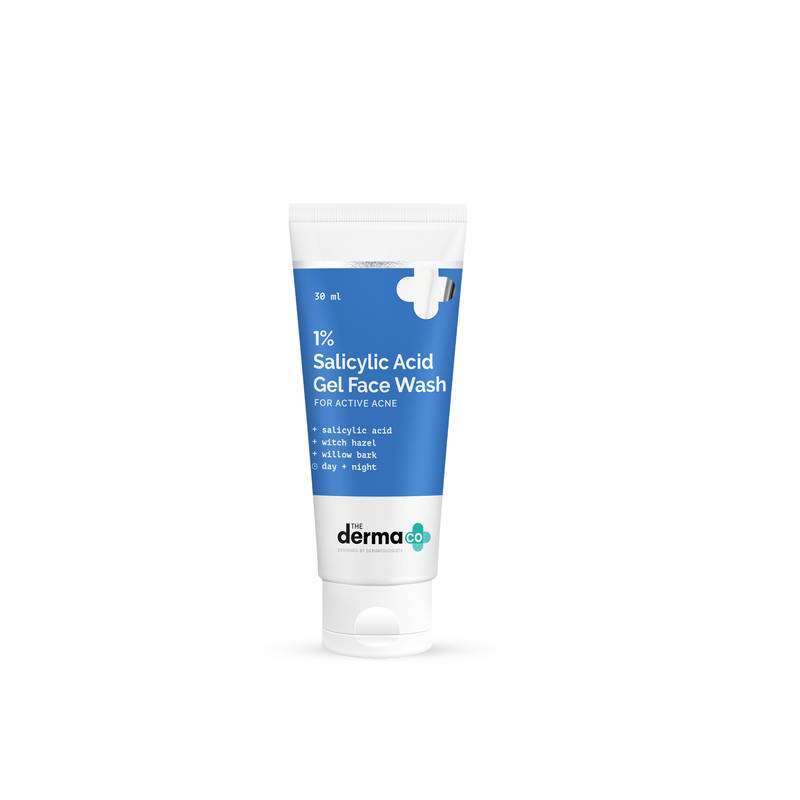
1% Salicylic Acid Gel Face Wash - The Derma Co
₹299 / 100mlThe entry-level BHA gel cleanser from TDC - the most recommended starting point for anyone new to salicylic acid, or for combination skin that doesn't tolerate 2% without dryness. The 1% concentration still delivers pore-clearing and exfoliation benefits with lower risk of barrier disruption. The gel format (not foaming) is less stripping and retains moisture better than lathering cleansers - important when introducing any new acid into a routine. Witch Hazel provides mild astringency and reduces visible pore size over time. Dermatologist-tested and non-comedogenic.
1% Salicylic Acid Gel Face Wash →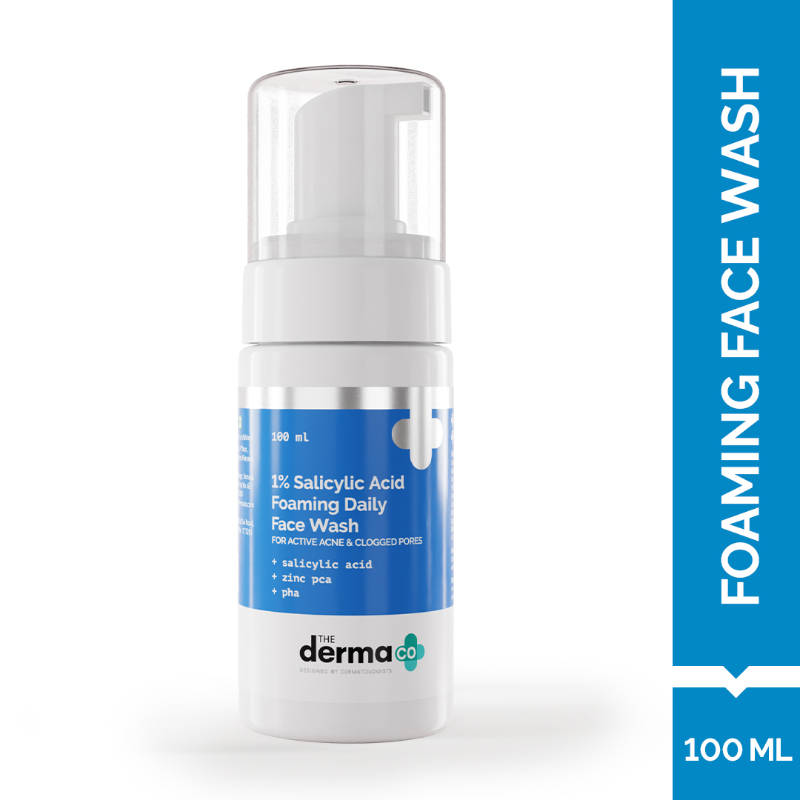
1% SA Foaming Daily Face Wash with Zinc PCA & PHA - The Derma Co
₹349 / 100mlThree actives working together in a foaming formula - the most feature-rich SA face wash in TDC's range. 1% Salicylic Acid clears inside the pore. Zinc PCA (a zinc salt bound to pyrrolidone carboxylic acid, a natural skin moisturising factor) regulates sebum production at the gland level and exerts mild antimicrobial action against acne-causing bacteria - making it the most effective oil-control combination in a rinse-off product. PHA (Gluconolactone) is a polyhydroxy acid that exfoliates the surface more gently than AHAs - it has a larger molecular structure that penetrates more slowly, and also provides mild hydration. The combined effect: clearer pores, reduced oil through the day, and no barrier disruption from over-exfoliation. Recommended by TDC for all-year daily use on oily skin.
1% SA Foaming Face Wash with Zinc PCA & PHA →
Tea Tree Face Wash for Acne & Pimples - Mamaearth
₹249 / 150mlA natural-base alternative for those with mild or infrequent breakouts who prefer to avoid chemical BHA actives. Tea Tree Oil (Melaleuca alternifolia) has well-documented antimicrobial properties - clinical trials have shown it reduces acne lesion count at a rate comparable to 5% benzoyl peroxide, though with a slower onset. Neem Extract (Azadirachta indica) adds broad-spectrum antibacterial and anti-inflammatory activity, traditionally used for acne management in Ayurvedic dermatology. Together they create a gentler, naturally-derived anti-acne cleanser. A practical choice for sensitive skin, teenagers starting an acne routine, or anyone managing occasional mild breakouts rather than persistent moderate acne. Free of parabens and SLS; suitable for normal-to-oily skin.
Tea Tree Foaming Face Wash →Quick Comparison: Which Formula Suits You?
| Product | SA% | Best For | Format | Price |
|---|---|---|---|---|
| TDC 2% SA Gel Face Wash | 2% | Moderate/stubborn acne, oily skin | Gel | ₹349 |
| TDC 1% SA Gel Face Wash | 1% | Mild acne, beginners, combination skin | Gel | ₹299 |
| TDC 1% SA + Zinc PCA + PHA Foaming | 1% | Daily use, oil control priority, texture | Foaming | ₹349 |
| Mamaearth Tea Tree Face Wash | 0% | Mild acne, sensitive skin, natural-base | Foaming | ₹249 |
How to Use a Salicylic Acid Face Wash for Best Results
Contact time matters. SA needs 30-60 seconds of contact before rinsing to begin its exfoliating action. The most common mistake is applying the face wash and rinsing off immediately. Wet the face, apply a pea-sized amount, massage gently (no scrubbing) in small circular motions for 30-45 seconds, then rinse with lukewarm water. Avoid hot water - it increases skin dryness after an acid cleanser.
Morning is the priority slot. For most Indian skin types dealing with nightly sebum buildup, pollution and sweat from the previous day, using the SA face wash in the morning is more effective. It sets up clean, clear skin for your SPF - which must follow every morning. If you use a BHA toner or serum in your evening routine, use a gentle non-acid cleanser at night to avoid over-exfoliation.
Frequency by concentration. 1% formulas are designed for once or twice daily. 2% formulas work best once daily for the first 4-6 weeks. If dryness or tightness appears after cleansing, reduce to every other day and introduce a lightweight non-comedogenic moisturiser immediately after patting the face dry. Most oily to combination skin types tolerate daily use comfortably after 2-3 weeks.
Routine layering for acne-prone Indian skin (morning): SA face wash (30-sec contact) - lightweight hydrating toner or essence (optional) - non-comedogenic moisturiser - SPF 30 or higher. Managing uneven skin texture alongside acne is easier when SPF follows the SA cleanse every morning.
What to avoid while using SA. Do not combine a 2% SA face wash with a high-strength AHA toner or retinoid serum in the same morning routine without dermatologist guidance - two exfoliating actives together can break down the skin barrier faster than it can repair itself. Benzoyl peroxide and niacinamide are generally safe alongside SA. Vitamin C (LAA) can be used in the evening.
Common Questions About Salicylic Acid Face Wash
What are the main benefits of using a salicylic acid face wash?
A salicylic acid face wash primarily clears and prevents acne by working inside the pore - not just on the skin surface. The core benefits for Indian skin are: dissolving the oil-and-dead-cell plugs that form blackheads and whiteheads; reducing the inflammatory response around active pimples (which makes them heal faster and leave fewer marks); controlling excess sebum through the day; and gradually refining skin texture as pore congestion clears over weeks of use.
For Indian skin tones (Fitzpatrick IV-V), the indirect benefit - faster resolution of active acne, which limits post-inflammatory hyperpigmentation - is often as significant as the direct pore-clearing action.
How does salicylic acid in a face wash work on acne?
Salicylic acid is a beta-hydroxy acid (BHA) that is lipophilic - it dissolves in oil rather than water. This lets it penetrate through the sebum lining a follicle and reach the inside of the pore, where it breaks the bonds between clumped dead skin cells (corneocytes) that form the physical blockage. It also suppresses the COX enzyme pathway that triggers redness and swelling around forming pimples.
The result is a two-part action: a clearing action (dissolving the plug) and an anti-inflammatory action (reducing redness and swelling). With 30-60 seconds of contact time and daily use at 1-2%, a face wash delivers both effects - even though it is a rinse-off product. Consistent use over 4-8 weeks is required to see the cumulative pore-clearing benefit.
Can salicylic acid face wash be used daily?
Yes - most 1% formulas are designed for daily use, morning or evening. At 2%, once daily is the recommended starting frequency. Begin with once daily and assess your skin after 2-3 weeks. If you notice dryness, tightness or mild flaking, reduce to every other day and use a non-comedogenic moisturiser after cleansing.
Most people with oily or acne-prone skin tolerate daily use well without any dryness. Those with combination or sensitive skin often find that restricting use to mornings only - and using a gentle cleanser at night - gives the same benefit without overworking the skin barrier.
Which percentage of salicylic acid is best in a face wash?
For a rinse-off face wash (where contact time is shorter than a leave-on toner or serum), 1-2% is the clinically effective range available in India. 1% suits beginners, combination skin or anyone managing mild to moderate acne who is new to BHA - it delivers real pore-clearing benefits with a low risk of dryness. 2% is better for oily skin with persistent moderate acne, stubborn blackheads, or when 1% has been used consistently for 6+ weeks without sufficient improvement.
There is no reliable clinical evidence that concentrations above 2% in a rinse-off format produce meaningfully better outcomes - the difference is in penetration time, which a face wash limits by design.
Does salicylic acid face wash cause dryness?
Most users tolerate salicylic acid face wash well, especially at 1%. Starting once daily and following with a non-comedogenic moisturiser (hyaluronic acid-based or ceramide-based) keeps the skin barrier comfortable even at 2%. The key steps are: apply moisturiser right after cleansing; avoid combining with other exfoliating actives in the same routine step; and use gel formats over foaming ones if your skin runs combination rather than oily.
If some tightness appears in the first week, reducing to every other day for 2 weeks and then building back up resolves it for most people. The TDC 1% SA Foaming Face Wash with PHA is formulated with this in mind - PHA adds gentle surface hydration alongside its exfoliating action, making it a strong choice for anyone who wants daily use without barrier compromise.
How long does salicylic acid face wash take to show results?
Most users see a reduction in new breakouts within 4-6 weeks of consistent daily use. Blackhead improvement typically appears at 6-8 weeks. Overall skin texture and pore clarity improve progressively over 8-12 weeks. Salicylic acid does not produce overnight results - the mechanism works cumulatively as the pore lining gradually clears and sebum production normalises.
Switching products every few weeks is the most common reason for poor outcomes. The 8-12 week timeframe is the standard dermatological guideline for BHA results. Taking photos under similar lighting every 3-4 weeks is the most reliable way to track change, since daily visual assessment tends to underestimate gradual improvement.
Can salicylic acid face wash emove blackheads?
Yes - this is one of the most clinically supported uses of salicylic acid. Blackheads (open comedones) form when sebum and dead cells oxidise at the pore opening. Salicylic acid dissolves the oily debris inside the follicle and loosens the plug from the inside - something physical exfoliation cannot reach.
Regular use over 8-12 weeks produces a visible reduction in blackhead count and depth, especially on the nose, chin and forehead - the areas with the highest density of sebaceous glands on Indian skin. For deeply embedded blackheads, combining a 2% SA face wash with a leave-on BHA toner or serum used 2-3 times a week accelerates results. Avoid manually squeezing blackheads while using SA - this can push trapped debris deeper into the follicle and worsen inflammation.
Is salicylic acid face wash safe for Indian skin in summer?
Yes - and it is particularly suited to summer use in India. High humidity, heat and sweat increase sebum production and pore congestion, which is exactly what SA addresses. A daily morning cleanse with a SA face wash clears overnight oil buildup and preps the skin before sunscreen application.
The one non-negotiable rule: apply SPF 30+ every morning after your SA face wash. Salicylic acid modestly increases UV sensitivity - not in the dramatic way a chemical peel does, but enough that sun protection becomes more important, not less. In monsoon months when India's air is most humid and acne most likely to flare, a SA face wash in the morning is a low-effort preventive step without adding extra actives. Pairing it with SPF 30+ every morning completes the routine - sunscreen protects the clearer skin you are building with every wash.
References
- Arif T. Salicylic acid as a peeling agent: a comprehensive review. Clin Cosmet Investig Dermatol. 2015;8:455-461. doi:10.2147/CCID.S84765
- Kessler E, Flanagan K, Chia C et al. Comparison of alpha- and beta-hydroxy acid chemical peels in the treatment of mild to moderately severe facial acne vulgaris. Dermatol Surg. 2008;34(1):45-51.
- Seidler EM, Kimball AB. Meta-analysis comparing efficacy of benzoyl peroxide, clindamycin, benzoyl peroxide with salicylic acid, and combination benzoyl peroxide/clindamycin in acne. J Am Acad Dermatol. 2010;63(1):52-62.
- Draelos ZD, Thaman LA. (eds). Cosmetic Formulation of Skin Care Products. Taylor & Francis, 2006.
- Zaenglein AL, Pathy AL, Schlosser BJ et al. Guidelines of care for the management of acne vulgaris. J Am Acad Dermatol. 2016;74(5):945-973.
- Gupta AK, Nicol K. The use of sulfur in dermatology. J Drugs Dermatol. 2004;3(4):427-431. (context: BHA comparison)


